About Fridge Water Filter
Fridge Water Filter exists to answer one specific question quickly and correctly: which water filter reference fits my fridge. Most searches for a fridge water filter end on a retailer's product page that assumes you already know the reference code, or on a generic listing that names dozens of fridge models without confirming any of them.
How the catalogue is built
Every reference published on this site is traced to either the manufacturer's own documentation or a recognised distributor's product listing, and the source is named on each model page. Where a figure such as exact capacity in litres or a specific NSF standard is not published anywhere we could verify, the page says so and tells you to check the pack instead of publishing a guess. We would rather list a smaller catalogue that can be trusted than a larger one with entries that might send you to the wrong part.
| What we do | What we do not do |
|---|---|
| Trace every reference to an official or verifiable source | Invent or estimate a filter reference to fill a gap |
| State the exact fitment, fitting position and change interval for each cartridge | Publish generic listings that name many models without confirming fit |
How this site is funded
Fridge Water Filter earns a small commission when you buy a cartridge through one of the Amazon UK links on this site, at no extra cost to you. As an Amazon Associate, this site earns from qualifying purchases. Links are placed after the answer, not before it, and we do not run advertising banners or collect your details through a sign up form.
What the catalogue covers today
| Brand | References listed | Filter codes covered |
|---|---|---|
| Samsung | 3 | DA29-00020B, DA29-00003G, DA29-10105J |
| LG | 1 | ADQ73613401 (LT800P) |
| Bosch | 1 | 644845 (UltraClarity) |
| Siemens | 1 | 644845 (UltraClarity), shared with Bosch |
| Whirlpool | 1 | SBS002 |
| Beko | 1 | 4874960100 |
| Haier | 1 | 0060823485A |
| Hisense | 1 | DA2010CB |
| Daewoo | 1 | DD7098 |
| Hotpoint | 1 | SBS002, shared with Whirlpool |
The catalogue grows from the requests we receive: a model that is missing gets researched, and it is published once a manufacturer or distributor source confirms the reference.
Fitting position is the fitting test
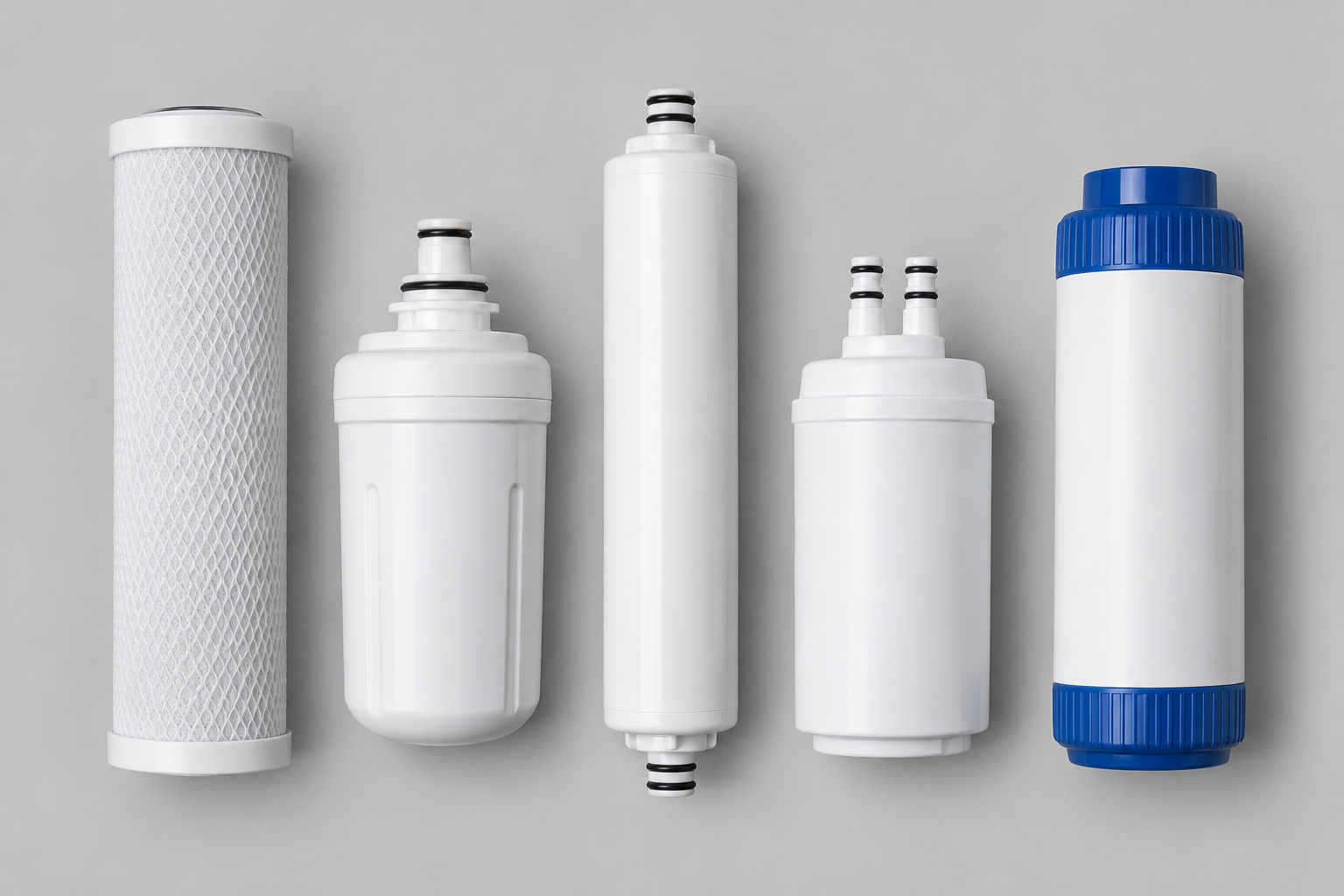
A filter's fitting position, whether it is an internal twist lock cartridge, a base grille cartridge or an external in line filter on the water pipe, decides whether it can physically go into your fridge at all. Capacity and change interval tell you how long a cartridge lasts, not whether it fits, so always check fitting position first.
| Brand | Reference | Fitting position |
|---|---|---|
| Samsung | DA29-00020B | Internal, twist lock, top right of fresh food compartment |
| Samsung | DA29-00003G | Internal, older housing behind a filter cover |
| Samsung | DA29-10105J | External, in line on the water supply pipe |
| LG | ADQ73613401 | Internal, upper interior of the fridge compartment |
| Bosch and Siemens | 644845 | Internal, UltraClarity housing |
| Whirlpool and Hotpoint | SBS002 | Internal, base grille, quarter turn |
| Beko | 4874960100 | Internal, long head with two wing keyways |
| Haier | 0060823485A | Twist fit; confirm internal or external on your model |
| Hisense | DA2010CB | Internal cartridge |
| Daewoo | DD7098 | External, in line on the water supply pipe |
Practical procedure for identifying a fridge water filter
Start with the fridge, not with the old cartridge. Open the fresh food compartment and read the rating plate. It is usually on an inside wall, behind a salad drawer, or near the door frame. Write down the full model code exactly as printed, including letters, numbers, spaces and suffixes. A suffix can change the water system even when the visible fridge looks the same.
Next, find the water filter itself and record its position. Use a torch and check four common areas: the top right or top left of the fridge compartment, the lower grille at the front, the rear of the appliance, and the cold water pipe outside the cabinet. If the cartridge is external, measure the plastic water pipe before ordering fittings. Domestic fridge pipe is commonly 6.35 mm, also called 1 quarter inch, but some installations use 8 mm pipe.
Remove the cartridge only when you have isolated the water supply if the filter is external. For internal cartridges, place a towel underneath and turn the cartridge slowly. Most internal twist filters release after about a quarter turn or a half turn. Do not use pliers on a plastic cartridge head unless the manufacturer instructs it, because the head can crack before the seal releases.
Clean the label with a dry cloth and copy every code on the cartridge. Ignore only batch dates and recycling symbols. Photograph the front label, the connection end and the fitting area in the fridge. These three photos are usually enough to separate a real match from a similar looking cartridge. If the codes conflict, use the fridge model and the fitting position as the stronger evidence, then check the support notes in the FAQ.
Equipment, measurements and working figures
A careful identification check takes about 10 to 20 minutes. A replacement job normally takes 5 to 15 minutes for an internal cartridge and 15 to 30 minutes for an external in line filter, because the pipe has to be cut or re seated. Keep a bowl or tray under the work area. Even after the water is turned off, 50 ml to 300 ml of water can drain from the housing or pipe.
| Item or figure | Use | Practical value |
|---|---|---|
| Torch | Reading labels inside the cabinet or behind drawers | A phone light is usually enough, but a small torch leaves both hands free |
| Tape measure or ruler | Checking external pipe size and clearance | Measure pipe outside diameter, commonly 6.35 mm or 8 mm |
| Towel and shallow tray | Catching water from the filter head | Allow for 50 ml to 300 ml of trapped water |
| Camera phone | Recording model plate, cartridge code and connector shape | Take at least 3 photos before disposal |
| Marker pen and tape | Marking flow direction on an external pipe | Mark inlet and outlet before removing the old filter |
| Timer or jug | Flushing after replacement | Use the cartridge instructions, many fridges need several litres before use |
For clearance, allow at least the full length of the cartridge plus 30 mm for hand movement where the filter twists out sideways or downwards. For external filters, leave enough straight pipe on both sides for the push fit connectors to grip cleanly. If the pipe end is scratched, oval or cut at an angle, trim it square before refitting.
Frequent mistakes and recovery steps
The most common mistake is ordering by fridge brand alone. The same brand can use internal cartridges, base grille cartridges and external in line filters. If the page you are checking does not name the fitting position, treat it as incomplete information and compare it with the actual fridge before buying.
- If the old cartridge is stuck, relieve water pressure first. Turn off the supply, press the dispenser for 5 to 10 seconds, then try again with steady hand pressure.
- If the new cartridge will not lock, stop before forcing it. Compare the lugs, seal position and nose shape with the old unit. A similar body can still have a different locking key.
- If water leaks after fitting, remove the cartridge, check that the seal is present and clean, then refit it squarely. A twisted seal can leak even when the reference is correct.
- If water flow is weak, check that the external stop valve is fully open and that the cartridge has been flushed. Air can reduce flow for the first few minutes.
- If the dispenser tastes of carbon dust, continue flushing according to the cartridge instructions. Do not judge taste from the first glass after fitting.
Do not throw away the old cartridge until the new one has been installed and tested. Keep it for at least 24 hours. If there is a leak, a poor lock, or an error on the fridge display, the old cartridge gives you a physical reference for comparison and helps avoid guessing.
Special cases that need extra checking
Some fridges are sold under one brand but use a water system shared with another brand. In that case, the printed cartridge code and the fitting position matter more than the badge on the door. Shared systems are a normal service situation, but they should still be confirmed by a source, not assumed from appearance.
American style fridges with external filters can also be affected by the installation rather than the fridge design. A plumber may have fitted a universal in line cartridge on the feed pipe, while the fridge model originally supported a different internal or base filter. If you see both an internal filter housing and an external cartridge on the same water line, identify both before ordering. One may be active, bypassed, or left in place from an older installation.
Rental properties and second hand appliances need one extra check: confirm that the bypass plug, blanking cap or old cartridge has not been used to solve a previous leak. If a housing has been bypassed, fitting the correct cartridge may expose a damaged seal or cracked head. Test slowly, with the appliance pulled forward enough to inspect the rear and floor area.
If you cannot read the label or the cartridge is missing, use the fridge model plate, the filter housing position and clear photos of the connector area. Send or compare those details before relying on a visual match. For more basic identification questions, use the FAQ before removing any pipework.
Read next
- Hotpoint SBS002 water filter: The exact water filter reference for Hotpoint UK American style side by side fridges.
- OEM versus compatible and universal inline fridge water filters: When a universal inline filter can replace a brand specific cartridge, and when it cannot.
- How to identify your fridge model before buying a water filter: How to find your fridge's full model number and use it to confirm the correct water filter reference.